


Product successfully added to your shopping cart
Subtotal of your cart (1 item)
:


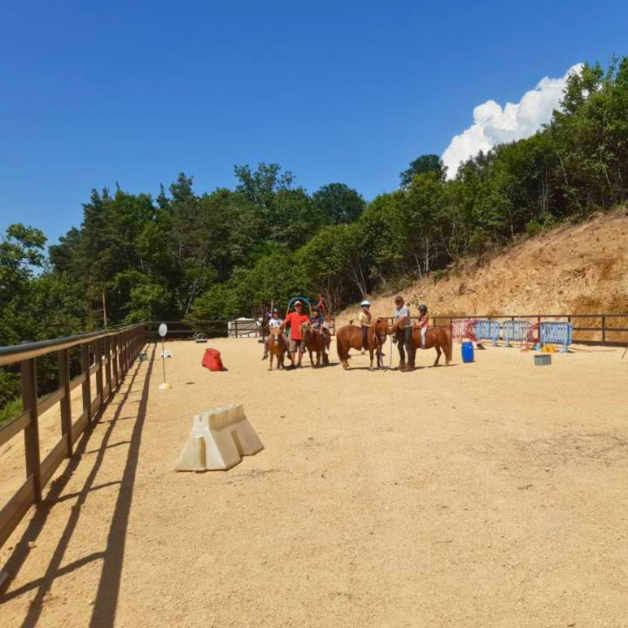


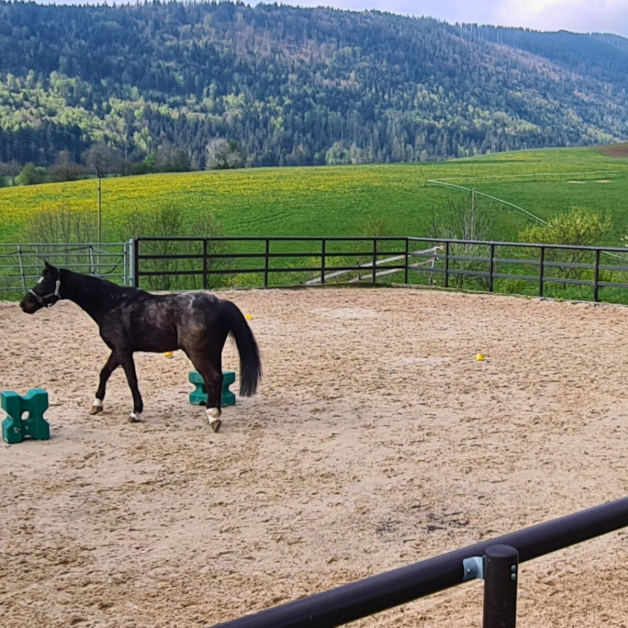
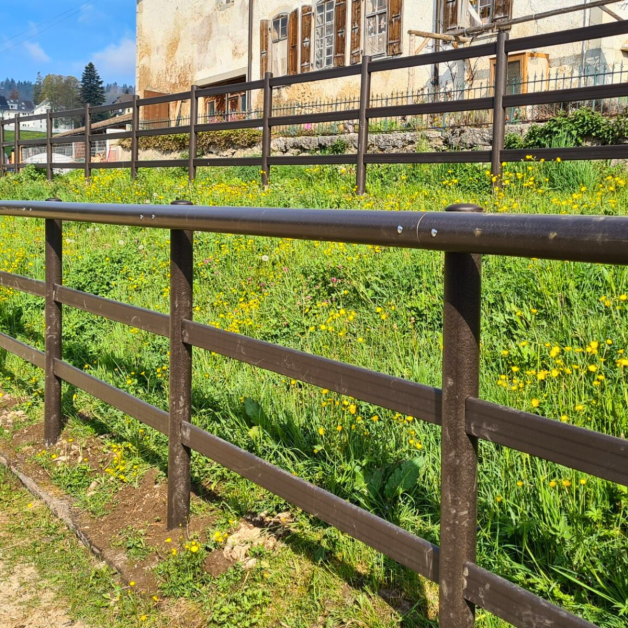


tax excl.
tax incl.
0,00 € per
More info
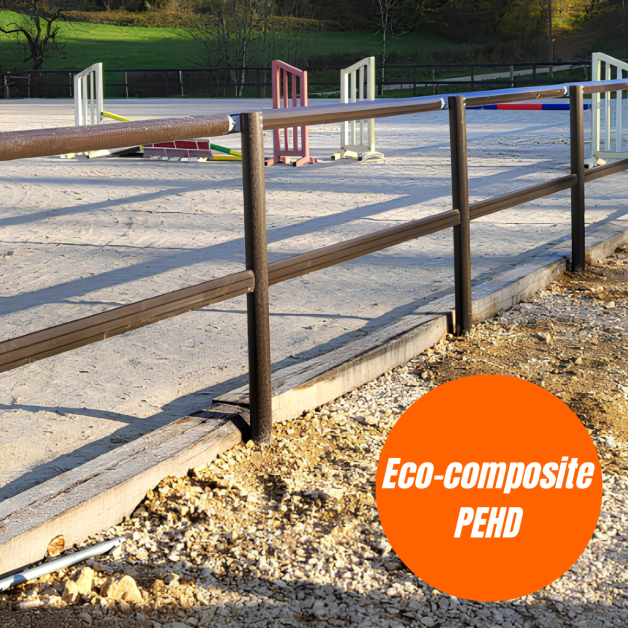
Even before discussing the material, it's important to understand why this barrier is unlike any traditional fence.
Most barriers on the market consist of rails simply screwed onto wooden posts. This system is economical but has several drawbacks: the screws remain visible, the rails can warp over time, and the rigidity mainly depends on the quality of the wood.
The eco-composite barrier distributed by Terwagne-Élevage takes a completely different approach.
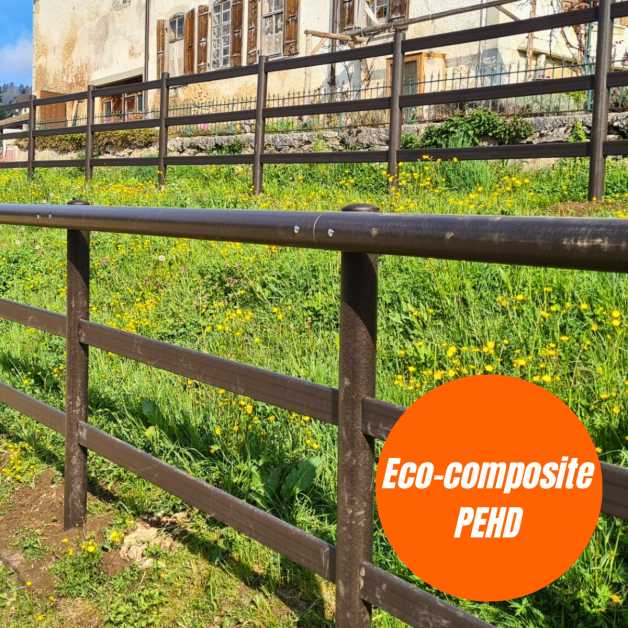
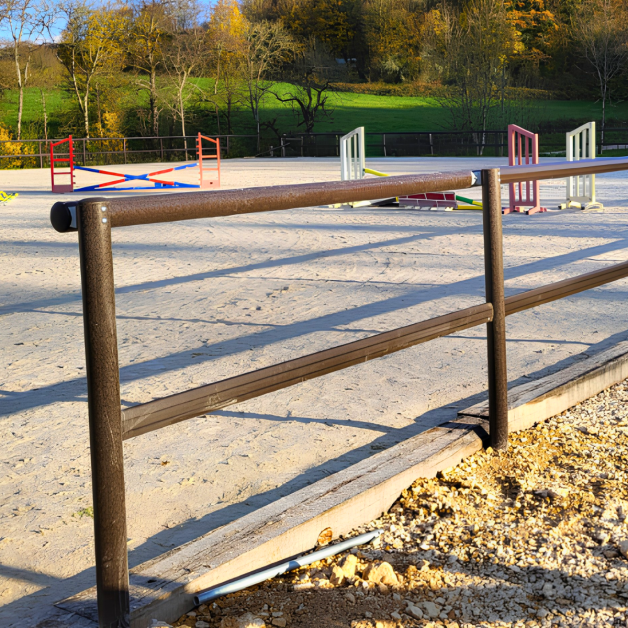
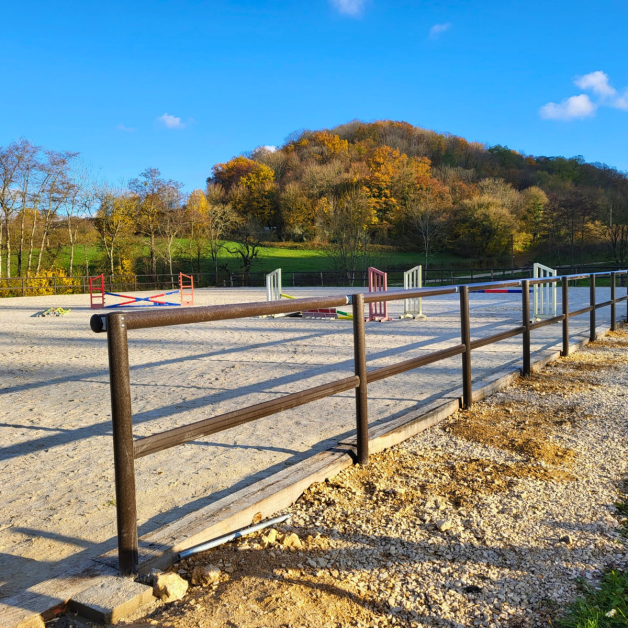
The rails slot directly into the posts. The handrail, on the other hand, is attached to the side of the post using galvanized metal supports. This design allows for the integration of a continuous metal reinforcement inside the handrail while maintaining a particularly neat finish.
The result is a more homogeneous, more elegant, and much more refined structure than a simple screwed fence.
This design also facilitates the assembly of corners, enhances the overall rigidity of the barrier, and offers a high-end appearance highly valued in equestrian centers, private properties, and professional installations.
|
Specification |
Description |
|
Material |
Eco-composite composed of 80% recycled wood and 20% recycled high-density polyethylene (HDPE) |
|
Posts |
Diameter 100 mm – Height 180 cm – Approximately 40 cm embedded – Honeycomb internal structure |
|
Handrail |
Round profile Ø100 mm – Reinforced with galvanized steel tube Ø33 mm – Lateral attachment on the side of the posts – Interior or exterior assembly |
|
Rails |
Oval profile 100 × 32 mm – Length 250 cm – Available with one or two rails |
|
Metalwork |
Supports in hot-dip galvanized steel – Galvanized hardware |
|
Color |
Wood-like brown |
|
Spacing between posts |
2.50 m |
|
Manufacturer's Warranty |
20 years against any manufacturing defect |
When investing in an arena, one wants its layout to maintain its appearance for many years.
Therefore, the choice of material is crucial.
The manufacturer EGC Composite has developed an eco-composite specifically intended for outdoor equipment subjected to particularly demanding conditions.
This material is made up of:
The recycled wood provides its texture, rigidity, and natural aesthetics.
The high-density polyethylene protects the material against moisture, weather, and external aggressions.
The combination of these two components results in a material that retains the appearance of wood without suffering its main weaknesses.
It is common to think that a composite fence is simply a plastic fence.
In reality, this material has nothing to do with hollow plastic or conventional PVC.
The eco-composite used here contains a very high proportion of recycled wood fibers. These give it its natural appearance, pleasant touch, and significant rigidity.
The HDPE acts as a protective matrix. It envelops the wood fibers and protects them durably against external aggressions.
This technology allows for:
The material thus remains stable throughout the seasons.
Wood is a living material.
Even after its transformation, it continues to react to weather conditions. Over the years, it absorbs moisture and then dries again. This perpetual cycle gradually causes: - Shrinkage; - Swelling; - Cracks; - Deformation of the elements; - Degradation of the buried part. The area at ground level is generally the most sensitive. It is in this place where moisture remains present the longest. Over time, this alternation of moisture, frost, and drought often ends up weakening the post. Even treated wood requires regular monitoring. Eco-composite does not react in this manner. It is rot-proof and designed to withstand outdoor conditions durably. **A solution designed for modern equestrian facilities** The needs of an equestrian center are no longer the same as they were twenty years ago. Today, owners are looking for facilities that are: - Aesthetic; - Durable; - Easy to maintain; - Enhancing their establishment. An arena often represents the core of the operation. Its barrier is visible to all riders, visitors, and horse owners. Thanks to its appearance close to natural wood and the regularity of its profiles, this barrier immediately provides a neat and modern finish. It integrates well into: - An equestrian center; - A private stable; - A boarding facility; - A breeding farm; - A leisure property; - A farm. **A technical design down to the smallest details** One of the strengths of this barrier is that each component fulfills a specific function. It is not an assembly of standard profiles. Each element contributes to the solidity, finish, and durability of the whole. Let’s take a closer look at each of these components. **The posts: the backbone of the barrier** Each bay rests on round eco-composite posts. **Characteristics** - Diameter: 100 mm; - Total height: 180 cm; - Recommended buried part: about 40 cm; - Visible height: about 140 cm; - Honeycomb interior structure; - Top finishing cap. Unlike a solid post, the honeycomb structure optimizes the balance between rigidity and weight. Material is used only where it is truly needed. This design offers an excellent level of resistance while limiting the weight of the elements during handling. The posts also have specially machined grooves to receive the horizontal rails. This integration provides a particularly clean finish and improves the rigidity of the structure. **The rails: an elegant and perfectly integrated finish** The horizontal rails are made of the same eco-composite as the posts. Their oval profile of about **100 × 32 mm** gives them a particularly elegant appearance. Unlike traditional barriers where the crossbars are simply screwed against the posts, the rails directly fit into the slots designed for this purpose. This design has several advantages: - Excellent finish; - Perfect alignment; - Protected ends; - Better distribution of forces; - Much more upscale aesthetics. The rails are available in two configurations: - One rail; - Two rails. Depending on the chosen version, the barrier offers a more open demarcation or a more substantial filling. **The handrail: the true signature of this barrier** It is probably the element that immediately distinguishes this barrier from most models on the market. The handrail is not positioned between the posts. It is **offset on the side of the posts** and fixed with galvanized metal supports. This design choice offers several advantages. Firstly, it completely frees the grooves of the posts to allow the embedding of the rails. Secondly, it allows the integration of an inner galvanized steel tube ensuring mechanical continuity between the different sections. Finally, this arrangement gives the barrier a much more elegant silhouette. The handrail seems to naturally extend the line of the fence, creating a finish that is usually found on high-end equestrian facilities. The handrail can be installed: - On the inside of the arena; - Or on the outside, Depending on the project's configuration and the client's preferences. Perfect. In this second part, we move from the product presentation to the **sales arguments**. This is the part that should convince a client hesitating between a classic wooden fence and your solution. ## A structure reinforced with galvanized steel One of the great advantages of this barrier is that its strength does not rely solely on the composite material. The design cleverly combines two complementary materials: - Eco-composite for its durability, resistance to moisture, and lack of maintenance; - Galvanized steel to reinforce the rigidity of the assemblies. The handrail incorporates a **33 mm diameter** galvanized steel tube that runs through the various elements and ensures the mechanical continuity of the structure. At the joints, this tube connects the different sections of the handrail to achieve a particularly rigid assembly. The mounting brackets are also made of hot-dip galvanized steel. This design offers several advantages: - Excellent overall rigidity; - Better resistance to mechanical stress; - Perfect alignment maintenance; - Excellent durability over time; - Long-lasting protection against corrosion. Unlike some barriers where the rails are simply screwed onto the posts, this design distributes the forces across the entire structure. ## A barrier that requires virtually no maintenance Maintenance often represents the most underestimated expense of an arena. A wooden fence generally needs to be: - Cleaned; - Sanded if necessary; - Repainted or stained; - Regularly checked; - Repaired when an element starts to crack. These operations take time and represent a cost that increases over the years. With this eco-composite barrier, these constraints virtually disappear. The material: - Requires no painting; - Needs no staining; - Does not need to be treated against insects; - Does not need to be protected against rotting. A simple occasional cleaning with clear water or a low-pressure cleaner is generally sufficient to maintain a clean appearance. For an equestrian center, this represents several dozen hours of maintenance saved each year. ## Excellent resistance to moisture Equestrian facilities are particularly exposed to weather conditions. The barriers must withstand: - Repeated rain; - Wet soils; - Splashes; - Mud; - Frost; - Alternating drought and humidity. The eco-composite is specially designed to withstand these conditions. Unlike wood, it does not absorb moisture in the same way. It does not rot at ground level, which is generally the most fragile area of a traditional post. This feature is particularly interesting for: - Paddocks; - Areas near water troughs; - High-traffic passages; - Heavy soils; - Arenas exposed to bad weather. ## Excellent UV resistance The sun is one of the main factors contributing to the aging of outdoor materials. Ultraviolet rays can gradually degrade certain plastics or cause wood to gray. The composite used for this barrier is designed to withstand UV rays durably. It retains its appearance much longer than untreated wood. Like all materials permanently installed outdoors, a slight color change may occur over time. This change is primarily aesthetic and does not affect the product's mechanical qualities. ## Safety designed for horses When a horse moves around in an arena, it may run along the barrier, approach it, rub against it, or occasionally come into contact with it. The design of this barrier aims to limit several risks. ## No splinters The composite does not produce splinters like wood, which can split over the years. The risk of injuries related to wood splinters is thus greatly reduced. No significant cracks The material does not behave like natural wood. It does not develop the same characteristic longitudinal cracks as wooden posts. Homogeneous surface The surface remains smooth and pleasant to the touch. The manufacturer also states that the material provides a surface with good grip and a more flexible behavior during certain accidental contacts. However, a barrier should never be considered a device meant to intentionally receive impacts from a horse. A finish that enhances your property A well-executed arena truly adds value to a property. Thanks to its uniform wood appearance and the quality of its assemblies, this barrier offers a particularly elegant finish. The rails are perfectly aligned. The offset handrail provides an aesthetic signature. The fixings remain discreet. The finishing caps neatly close the posts. The whole gives an immediate impression of quality. This finish is particularly appreciated in: - Equestrian centers; - Private stables; - High-end boarding facilities; - Private properties; - Facilities intended to receive the public. Composite or wood? Which to choose? This is probably the question most buyers ask. Wood has undeniable charm. It remains a noble and traditional material that fits perfectly into many environments. However, it also presents several constraints. Over time, it can: - Crack; - Produce splinters; - Require treatments; - Absorb moisture; - Age unevenly. Eco-composite adopts a different philosophy. It maintains an appearance close to wood while eliminating a large part of these constraints. The choice mainly depends on your objective. If you are primarily looking for a durable investment requiring very little maintenance, composite is a particularly interesting solution. Detailed comparison: eco-composite or traditional wood?| Criterion | Eco-composite barrier | Wooden barrier |
|---|---|---|
| Appearance | Very close to wood | Natural |
| Splinters | No | Yes over time |
| Cracks | Very limited | Possible |
| Rot | Rot-proof | Possible at ground level |
| Treatment | None | Regular |
| Paint / stain | Not necessary | Often recommended |
| Humidity | Excellent resistance | Varies by species |
| UV | Very good resistance | Natural aging |
| Insects | Very low sensitivity | May require treatment |
| Maintenance | Very reduced | Regular |
| Usage duration | Very significant | Variable |
| Recyclability | Yes | Varies by treatment |
Combinations available
Check some of theses attributes to see what attribute combination is available

|
Ref: 001001 |
Available now |
119,00 € |

|
Ref: 001002 |
Available now |
139,00 € |
Questions / Answers
Be the first to ask a question about Career barrier in eco-composite with handrail
Reviews
You must log in to give a review
Customers who bought this product also bought:

Agricultural work requires farmers and breeders to wear shoes suitable for the terrain conditions. Terwagne, a specialist in breeding equipment, offers you some advice to help you choose the most suitable work boots for your needs.
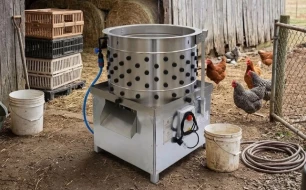
As a poultry breeder, you know how plucking can be long and demanding when done manually. Terwagne, a specialist in breeding equipment, explains how a poultry plucker can facilitate this task and optimize your productivity on a daily basis.
Terwagne | Company N° : 0882.449.184 | Legal Notice & Contact | General Conditions
Terms of use of website | Cookies | Personal Data | Processing of your data by Google
© Copyright 2023-2026 - E-net Business, creator of e-commerce websites for businesses, self-employed, & SMB.


Product successfully added to your shopping cart